









On-the-job training
The on-the-job training courses give the trainees the chance to apply the techniques they learn from standard courses on their own real data. This will be realized in a form of a project that will be designed by the course instructor in cooperation with the trainees. This should handle real work problems using real data from the trainees’ side. The contents of this project are to be discussed between the course instructor and the trainees before the course.
Custom Training
We also offer customized training courses that fits the client specific needs and requirements. Some of the available courses are listed here and we are expanding our portfolio very soon. Other courses could be composed upon your request.
GIS Management Issues (one day)
This course introduces the top management, department heads and projects managers as well as technical staff from all levels to key management issues that need to be addressed when dealing with GIS data, staff and projects. The course provides the attendees with an overview of the key management issues that affect the design, development, implementation and use of GIS. Such issues include setting up an enterprise level spatial database, conducting GIS needs assessment, writing and responding to requests for proposals (RFP), GIS projects implementation, Spatial data and metadata standards, data sharing and data warehousing, legal aspects of spatial data use, and web-based GIS.
Introduction to Remote Sensing using ERDAS Imagine (4 days)
This course provides an overview of the fundamental principles of remote sensing and satellite image analysis using ERDAS Imagine. In particular, the course focuses on the understanding and the use of satellite images in different applications. The course emphases on: the physical principles of remote sensing, remote sensing data acquisition, airborne and satellite platforms, image interpretation, image rectification and registration, image enhancement, image classification, and remote sensing applications in mapping, marine, transportation and environmental engineering.
Introduction to Surveying using GNSS (4 days)
This course introduces the participants from all levels to the concept and fundamentals of Global Navigation Satellite Systems (GNSS). It provides theoretical background on recent developments of GPS in precise surveying and monitoring applications, the concept of GNSS reference networks, examples of international projects in agriculture, construction, cadastre and environmental monitoring. The course also provides the participants with a theoretical overview of the existing satellite systems, main error sources on GNSS measurements and different measuring methods.
In a two-day practical training, the participants would then learn in the field how to build up a base station and to measure different points with a roving unit on various places with high accuracy. More important, they will learn how to plan the surveying process and how to explore the study area. The course concludes with one-day hands-on training on the GNSS data preparation with a surveying & engineering software after data collection in the field and the data transfer into ArcGIS.
end faq
{accordionfaq faqid=accordion faqclass="lightnessfaq defaulticon headerbackground headerborder contentbackground contentborder round5" active=item1}Standard ESRI training
ESRI ArcGIS standard courses are conducted through our ESRI authorized instructors in three languages to choose from: German, English or Arabic. We usually add one more day than ESRI standard course duration so that the course participants could comprehend the courses in the most efficient manner.
ArcGIS Desktop II: Tools and Functionality (4 days)
This course introduces the fundamental concepts of ArcGIS Desktop software and teaches how to use it to visualize, create, manage, and analyze geographic data. In course exercises, you will use ArcGIS tools to perform common GIS tasks and workflows. By the end of the course, you will understand the range of ArcGIS Desktop functionality and be prepared to work with the software on your own to create GIS maps, work with geographic data, and perform GIS analysis.
ArcGIS Desktop III: GIS Workflows and Analysis (3 days)
Advance your ArcGIS Desktop skills in this course that teaches how and when to apply ArcGIS tools to create an efficient workflow that supports GIS analysis. Working with data stored in a geodatabase, you will organize and prepare data for analysis, create geoprocessing models, and work through a challenging analysis project. By the end of the course, you will be able to determine which ArcGIS tools and functions to use in a given situation and apply them to your analyses. The skills taught in this course are applicable to all types of GIS analysis.
Building Geodatabases (4 days)
This course teaches the essential concepts and skills you need to centrally store, manage, and maintain the quality of your GIS data. You will learn how to create a geodatabase, migrate existing data to a geodatabase, and edit data stored in a geodatabase. In course exercises, you will create advanced geodatabase elements that maintain spatial relationships between features and automatically locate and fix errors according to rules and behaviors you set. This course is taught using an ArcInfo license of ArcGIS.
Programming ArcGIS Desktop Using Add-Ins (3 days)
ArcGIS 10 includes the add-in framework for extending ArcGIS Desktop. Add-ins provide a simple and lightweight approach to most common customizations and can be shared easily via e-mail, network shares, and public download. In this course, you will learn best practices for building add-ins to deliver custom ArcGIS functionality and how to integrate ArcObjects to deploy custom GIS processes.
end faq
{accordionfaq faqid=accordion faqclass="lightnessfaq defaulticon headerbackground headerborder contentbackground contentborder round5" active=item1}Capacity building
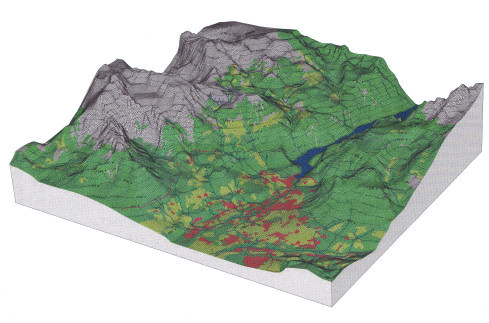
Our training covers a wide range of courses that deal with GIS and related technology. It introduces the basics and fundamentals of GIS, goes through the advanced analysis techniques, and covers the customized solutions and management. The training is intended for the potential GIS personnel of all types: GIS Users, Analysts, Developers and System Administrators as well as Managers and Directors. Additional courses and tailored training can be offered upon your request. For your convenience our training courses are conducted in German, English or in Arabic language.
Standard ESRI Training
ESRI ArcGIS standard courses are conducted through our ESRI authorized instructors in three languages to choose from: German, English or Arabic. We usually add one more day than ESRI standard course duration so that the course participants could comprehend the courses in the most efficient manner.
-
ArcGIS Desktop II: Tools and Functionality (4 days)
 This course introduces the fundamental concepts of ArcGIS Desktop software and teaches how to use it to visualize, create, manage, and analyze geographic data. In course exercises, you will use ArcGIS tools to perform common GIS tasks and workflows. By the end of the course, you will understand the range of ArcGIS Desktop functionality and be prepared to work with the software on your own to create GIS maps, work with geographic data, and perform GIS analysis.
 -
ArcGIS Desktop III: GIS Workflows and Analysis (3 days)
Advance your ArcGIS Desktop skills in this course that teaches how and when to apply ArcGIS tools to create an efficient workflow that supports GIS analysis. Working with data stored in a geodatabase, you will organize and prepare data for analysis, create geoprocessing models, and work through a challenging analysis project. By the end of the course, you will be able to determine which ArcGIS tools and functions to use in a given situation and apply them to your analyses. The skills taught in this course are applicable to all types of GIS analysis. -
Building Geodatabases (4 days)
This course teaches the essential concepts and skills you need to centrally store, manage, and maintain the quality of your GIS data. You will learn how to create a geodatabase, migrate existing data to a geodatabase, and edit data stored in a geodatabase. In course exercises, you will create advanced geodatabase elements that maintain spatial relationships between features and automatically locate and fix errors according to rules and behaviors you set. This course is taught using an ArcInfo license of ArcGIS. -
Programming ArcGIS Desktop Using Add-Ins (3 days)
ArcGIS 10 includes the add-in framework for extending ArcGIS Desktop. Add-ins provide a simple and lightweight approach to most common customizations and can be shared easily via e-mail, network shares, and public download. In this course, you will learn best practices for building add-ins to deliver custom ArcGIS functionality and how to integrate ArcObjects to deploy custom GIS processes.
 This course introduces the fundamental concepts of ArcGIS Desktop software and teaches how to use it to visualize, create, manage, and analyze geographic data. In course exercises, you will use ArcGIS tools to perform common GIS tasks and workflows. By the end of the course, you will understand the range of ArcGIS Desktop functionality and be prepared to work with the software on your own to create GIS maps, work with geographic data, and perform GIS analysis.
  Advance your ArcGIS Desktop skills in this course that teaches how and when to apply ArcGIS tools to create an efficient workflow that supports GIS analysis. Working with data stored in a geodatabase, you will organize and prepare data for analysis, create geoprocessing models, and work through a challenging analysis project. By the end of the course, you will be able to determine which ArcGIS tools and functions to use in a given situation and apply them to your analyses. The skills taught in this course are applicable to all types of GIS analysis.
  This course teaches the essential concepts and skills you need to centrally store, manage, and maintain the quality of your GIS data. You will learn how to create a geodatabase, migrate existing data to a geodatabase, and edit data stored in a geodatabase. In course exercises, you will create advanced geodatabase elements that maintain spatial relationships between features and automatically locate and fix errors according to rules and behaviors you set. This course is taught using an ArcInfo license of ArcGIS.
  ArcGIS 10 includes the add-in framework for extending ArcGIS Desktop. Add-ins provide a simple and lightweight approach to most common customizations and can be shared easily via e-mail, network shares, and public download. In this course, you will learn best practices for building add-ins to deliver custom ArcGIS functionality and how to integrate ArcObjects to deploy custom GIS processes.
 - 1
Custom Training
We also offer customized training courses that fits the client specific needs and requirements. Some of the available courses are listed here and we are expanding our portfolio very soon. Other courses could be composed upon your request.
-
Introduction to Remote Sensing using ERDAS Imagine (4 days)
 This course provides an overview of the fundamental principles of remote sensing and satellite image analysis using ERDAS Imagine. In particular, the course focuses on the understanding and the use of satellite images in different applications. The course emphases on: the physical principles of remote sensing, remote sensing data acquisition, airborne and satellite platforms, image interpretation, image rectification and registration, image enhancement, image classification, and remote sensing applications in mapping, marine, transportation and environmental engineering.
-
GIS Management Issues (one day)
This course introduces the top management, department heads and projects managers as well as technical staff from all levels to key management issues that need to be addressed when dealing with GIS data, staff and projects. The course provides the attendees with an overview of the key management issues that affect the design, development, implementation and use of GIS. Such issues include setting up an enterprise level spatial database, conducting GIS needs assessment, writing and responding to requests for proposals (RFP), GIS projects implementation, Spatial data and metadata standards, data sharing and data warehousing, legal aspects of spatial data use, and web-based GIS. -
Introduction to Surveying using GNSS (4 days)
This course introduces the participants from all levels to the concept and fundamentals of Global Navigation Satellite Systems (GNSS). It provides theoretical background on recent developments of GPS in precise surveying and monitoring applications, the concept of GNSS reference networks, examples of international projects in agriculture, construction, cadastre and environmental monitoring. The course also provides the participants with a theoretical overview of the existing satellite systems, main error sources on GNSS measurements and different measuring methods.
In a two-day practical training, the participants would then learn in the field how to build up a base station and to measure different points with a roving unit on various places with high accuracy. More important, they will learn how to plan the surveying process and how to explore the study area. The course concludes with one-day hands-on training on the GNSS data preparation with a surveying & engineering software after data collection in the field and the data transfer into ArcGIS.
 This course provides an overview of the fundamental principles of remote sensing and satellite image analysis using ERDAS Imagine. In particular, the course focuses on the understanding and the use of satellite images in different applications. The course emphases on: the physical principles of remote sensing, remote sensing data acquisition, airborne and satellite platforms, image interpretation, image rectification and registration, image enhancement, image classification, and remote sensing applications in mapping, marine, transportation and environmental engineering.
 This course introduces the top management, department heads and projects managers as well as technical staff from all levels to key management issues that need to be addressed when dealing with GIS data, staff and projects. The course provides the attendees with an overview of the key management issues that affect the design, development, implementation and use of GIS. Such issues include setting up an enterprise level spatial database, conducting GIS needs assessment, writing and responding to requests for proposals (RFP), GIS projects implementation, Spatial data and metadata standards, data sharing and data warehousing, legal aspects of spatial data use, and web-based GIS.
  This course introduces the participants from all levels to the concept and fundamentals of Global Navigation Satellite Systems (GNSS). It provides theoretical background on recent developments of GPS in precise surveying and monitoring applications, the concept of GNSS reference networks, examples of international projects in agriculture, construction, cadastre and environmental monitoring. The course also provides the participants with a theoretical overview of the existing satellite systems, main error sources on GNSS measurements and different measuring methods.
In a two-day practical training, the participants would then learn in the field how to build up a base station and to measure different points with a roving unit on various places with high accuracy. More important, they will learn how to plan the surveying process and how to explore the study area. The course concludes with one-day hands-on training on the GNSS data preparation with a surveying & engineering software after data collection in the field and the data transfer into ArcGIS.
This course introduces the participants from all levels to the concept and fundamentals of Global Navigation Satellite Systems (GNSS). It provides theoretical background on recent developments of GPS in precise surveying and monitoring applications, the concept of GNSS reference networks, examples of international projects in agriculture, construction, cadastre and environmental monitoring. The course also provides the participants with a theoretical overview of the existing satellite systems, main error sources on GNSS measurements and different measuring methods.
In a two-day practical training, the participants would then learn in the field how to build up a base station and to measure different points with a roving unit on various places with high accuracy. More important, they will learn how to plan the surveying process and how to explore the study area. The course concludes with one-day hands-on training on the GNSS data preparation with a surveying & engineering software after data collection in the field and the data transfer into ArcGIS. - 1
On-the-job Training
The on-the-job training courses give the trainees the chance to apply the techniques they learn from standard courses on their own real data. This will be realized in a form of a project that will be designed by the course instructor in cooperation with the trainees. This should handle real work problems using real data from the trainees’ side. The contents of this project are to be discussed between the course instructor and the trainees before the course.